

NEWS AND EVENTS
SCADA and PLCs – the hidden security challenges in industrial networks
SCADA systems and industrial components such as PLCs are the very backbone of modern industry. SCADA systems give operators overview and control, while PLCs carry out local control and regulation – for example in water supply, power distribution and production facilities. But how well do organisations really know the security posture of these systems?
Systems built for operations – not cybersecurity
Many industrial control systems were developed at a time when production networks were physically isolated from the outside world. The main priorities were stability, availability and predictable operation. Cybersecurity was rarely a central part of the design.
Today the situation is different. Control systems such as SCADA communicate with PLCs, operator stations (HMI), engineering workstations and a growing number of external systems. Remote access, integration with IT networks and supplier access have become a natural part of modern industrial operations.
This creates new attack surfaces that organisations do not necessarily have full visibility into. As a security analyst, one of the things I focus on most is the difference between how an OT network is meant to work and how it actually works.
PLCs – critical components with limited protection
A PLC executes the control logic that keeps industrial processes running. It receives signals from sensors, processes information and controls, for example, motors, valves, pumps and other production equipment.
The challenge is that PLCs are designed to operate within a protected network and therefore have limited built-in security mechanisms.
Older devices have simple authentication, do not use encryption and may have limited logging. Common industrial communication protocols such as Modbus TCP and older variants of S7 communication also lack built-in security functionality to prevent misuse. This means that an actor who gains access to the right network segment can easily gain the ability to communicate directly with the control systems.
The consequences of this can be serious:
- Unauthorised changes to control logic or process parameters.
- Manipulation of communication between SCADA and PLCs.
- Operational disruptions or unintended production stoppages.
- Reduced ability to detect unwanted changes in the control systems.
Newer equipment is now built with more security mechanisms that make it more robust and better suited to more exposed networks. But as a general rule, industrial components and protocols are suited to well-controlled environments, and unsuited to office networks and internet-exposed networks.
SCADA shows the process – but not necessarily the security threats
A SCADA system gives operators an overview of production processes, alarms and operating status. But this does not mean the system also provides sufficient insight into cybersecurity.
A PLC can, for example, appear to work completely normally from the operator's perspective while unauthorised communication with the device is taking place.
An engineering workstation may have access to more PLCs than necessary. An external supplier connection may be active without the organisation having sufficient control over the traffic. Or an unknown device may communicate with production equipment without triggering any process alarm. Normal production does not necessarily mean the control systems are secure. This is an important difference between traditional process monitoring and cybersecurity monitoring.
Why are these systems so difficult to secure?
One of the biggest challenges in OT security is that we cannot simply use the same security measures as in traditional IT environments.
Updating firmware or installing security software may require a production stop and must be tested to make sure it does not cause unintended changes. IT security solutions are not supported, and active security scanning can, in the worst case, affect stability if it is not adapted to the environment.
In addition, many organisations have control systems from several vendors, installed over many years, with varying degrees of documentation.
The result is that even organisations with strong IT security can have significant blind spots in the OT network.
Visibility is the first step towards better security
In my view, good OT security starts with understanding what is actually in the network and how the devices communicate.
Which PLCs are connected? Which systems communicate with them? Who has access to make changes? What communication is normal? And are remote access and integrations routed through security layers before reaching business-critical systems?
Through passive network monitoring, we can map communication patterns without disrupting production processes. By analysing traffic over time, we can establish a baseline and identify deviations that should be investigated further.
For selected PLCs, this insight can be supplemented with information directly from the control units, such as system status and protection level.
At SecureNOK, we use the SNOK® Cybersecurity Monitoring System for exactly this. By combining network sensors, endpoint sensors and PLC-specific monitoring, we can gain better insight into activity that traditional SCADA systems were not designed to detect.
Three questions everyone responsible for OT should be able to answer
There are three questions in particular I believe organisations should ask themselves:
- Do we have full visibility of which devices communicate with our SCADA systems and PLCs?
- Would we detect unauthorised communication or suspicious changes in our control systems?
- Do we know which security weaknesses actually exist in our production network today?
If the answer to one or more of these questions is no, that is a good starting point for taking a closer look at your security posture.
From assumptions to documented security
Cybersecurity in industrial control systems is not necessarily about replacing existing equipment or making extensive investments.
Often it is first about gaining an overview, identifying the most important weaknesses and prioritising measures that deliver the greatest risk reduction without affecting operations.
Through an OT Health Check, SecureNOK maps devices, communication patterns and potential security weaknesses over a defined period. The result is a report with concrete findings and recommendations for how the organisation can improve its security.
For me, the most important thing is that the organisation gets a real basis for decisions, not just an assumption that the systems are secure.
Because in industrial environments, it is not enough to know that the systems work. We also need to know that they work securely.
How well do you know the security of your SCADA and PLC environment?
SecureNOK offers an OT Health Check that gives an overview of connected devices, communication and potential security weaknesses – without disrupting production.
Read more about our OT Health Check or contact us at secure@securenok.com.


See more, fear Less. Explore
OT cybersecurity insights.
Insights from Norway’s cybersecurity experts




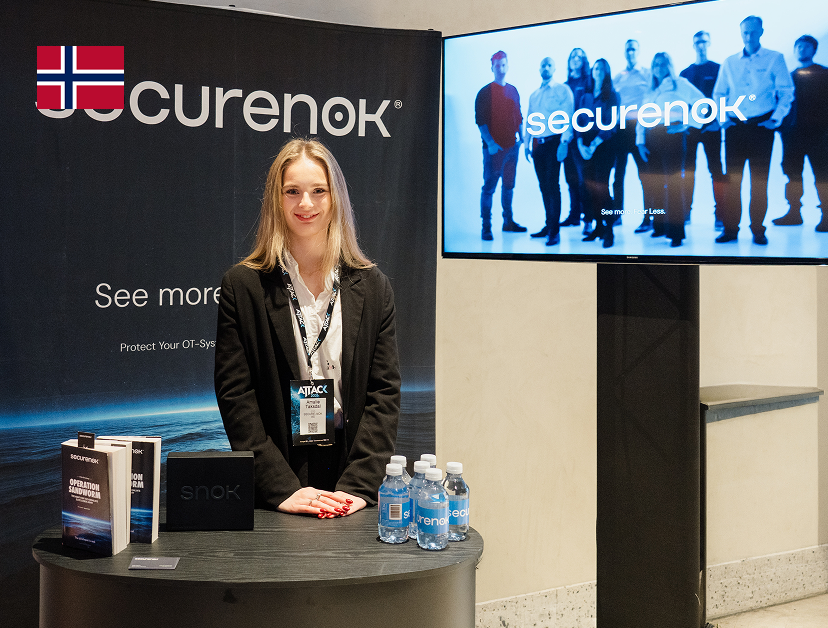
My first Attack conference: Golf, good conversations and a more serious backdrop
How do you present a cybersecurity company to potential customers while you are still learning about it yourself? I got to practise that when I attended my very first conference, the Attack conference, with SecureNOK on 13 October.

SNOK Health Check picks up speed – we are delivering OT overview after OT overview
What equipment is connected to the OT network, and who is communicating with whom? After several projects with the SNOK Health Check, I see how useful it is to get answers to these questions before deciding on the next security measure.
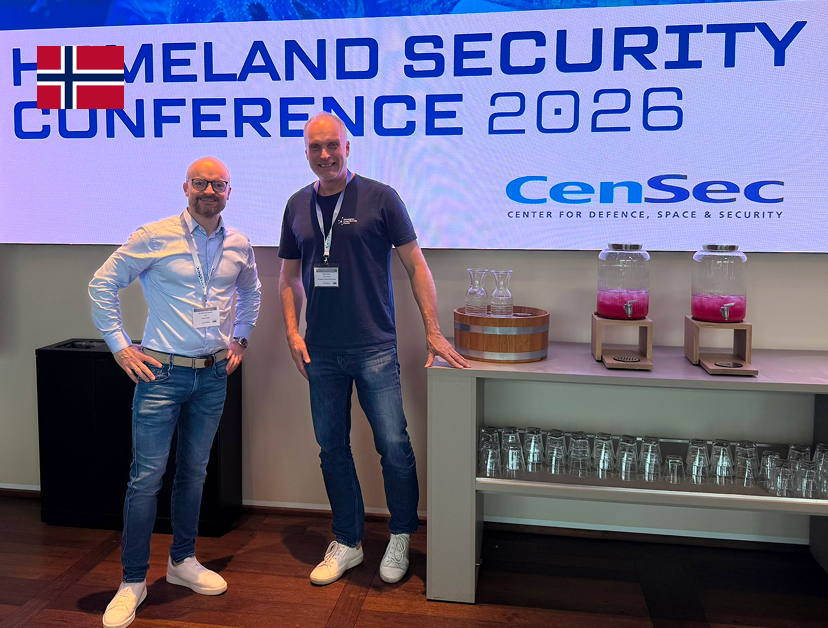
Water supply and critical infrastructure in focus at the Homeland Security Conference in Denmark
What does it take to keep society running when critical infrastructure is exposed to attacks and disruptions? This question was central when I attended the Homeland Security Conference in Copenhagen on 7 October with the Norwegian Cybersecurity Cluster.

Halfway through the OT Roadshow – time for the conversations that often have to wait
Trondheim, Bergen and Stavanger are done, and we are halfway through the OT Roadshow. For me, this is a valuable opportunity to look up from technology development and discuss security with those who know the everyday reality of industry.




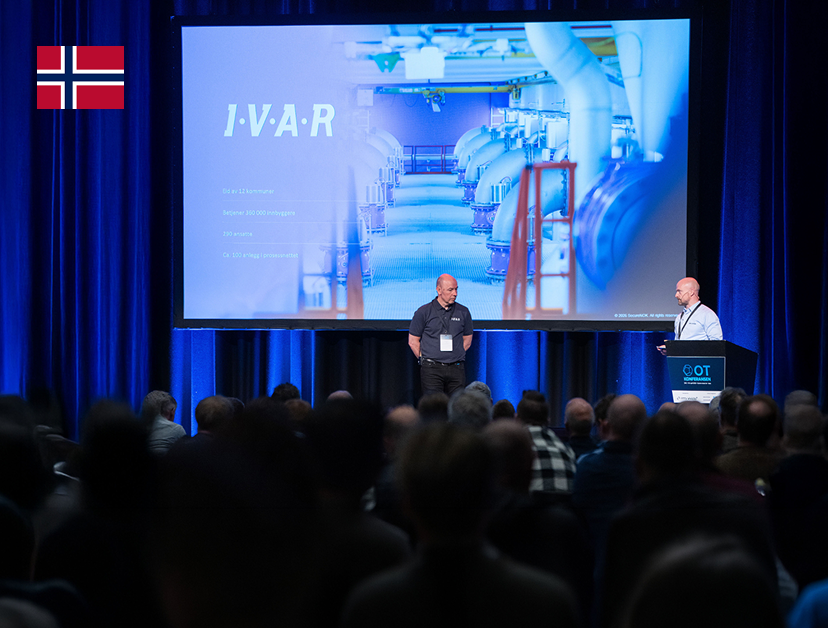
Full house as IVAR IKS shared its experiences with OT security
Interest in the webinar with IVAR IKS was greater than we had dared to hope. Through our October campaign on health checks for water and wastewater facilities, we are now making it easier for more organizations to take the same first step towards better overview and control of their OT environments.







ON 104 has been updated: New requirements for safer and more robust operations on the Norwegian continental shelf
From 1 June 2026, the updated version of Offshore Norge Guideline 104 (ON 104 Rev. 7) applies – one of the most important frameworks for cybersecurity in operational technology (OT) in the petroleum industry.


The Norwegian Food Safety Authority's new guide makes one thing clear: Waterworks must now take OT security seriously
The Norwegian Food Safety Authority (Mattilsynet) has now published the first official guide to the Digital Security Regulations for drinking water. It is an important milestone for Norwegian water supply – and a clear signal that the authorities are now stepping up work on digital security in the sector.


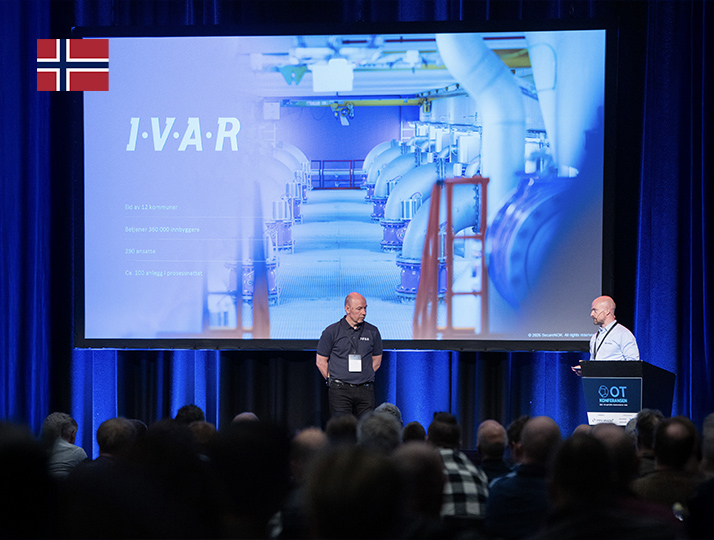
OT Konferansen shows the Nordics taking a leading role in OT security
Today, many industrial environments consist of industrial networks, virtual environments, Windows and Linux systems, remote access, patching and backup solutions, security tools, cloud services and integrations with IT.



OT security in the food industry starts with insight
As a project manager on OT security projects, I often encounter the same starting point at industrial companies: They know a great deal about production, processes and equipment – but far less about what the digital infrastructure actually looks like in practice.

Norwegian-developed OT security technology for industry and critical infrastructure
Norwegian industry is becoming increasingly digitalized. Production lines, process plants, energy systems and critical infrastructure are being connected more closely to modern IT systems, external suppliers and digital services. At the same time, there is a growing need for cybersecurity solutions actually developed for industrial environments.

Strong support for OT Konferansen 2026 – bringing together leading experts in Stavanger
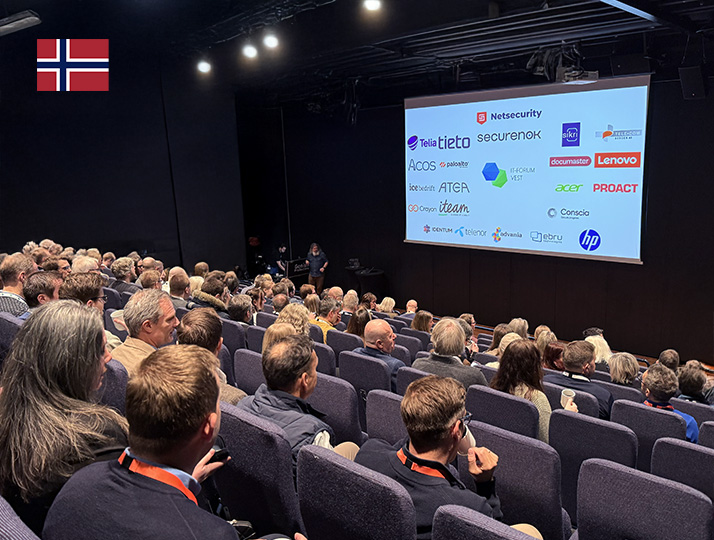
OT Konferansen 2026 takes place on 29 April in Stavanger, and this year's edition already stands out with a programme that brings together some of the most central players in OT security and industrial digitalization.
Growing need for control in complex automation environments in oil and gas
In recent years, the digitalization of the oil and gas industry has brought significant gains in efficiency, better data and greater flexibility. At the same time, this development has led to a significant increase in complexity – and therefore also in risk.

How to gain control of the OT environment in practice – experiences from IVAR
For IVAR IKS, stable operations are not just a goal – they are a prerequisite for society to function. As a provider of water and wastewater services to around 360,000 residents in Nord-Jæren, the organization manages critical infrastructure where the consequences of failure are immediate and extensive.

The Preparedness Year 2026: Are water and wastewater in Norwegian municipalities secure enough?
Municipal water supply is among the societal functions covered by the Digital Security Act. The Act entered into force on 1 October 2025 and sets basic requirements for digital security in organizations of particular importance to society. The regulations also place responsibility for digital security clearly with the organization's top management.




Stricter Security Requirements for Critical Services from 1 October 2025 under theDigital Security Act
O nFriday, 20 June, the Norwegian government decided in a Council of State meeting that the Digital Security Act will enter into force on 1 October 2025. At the same time, the Digital Security Regulation was adopted, entering into force concurrently with the Act.


Bremanger Breach: Lessons from a Norwegian Dam Hack
Earlier this year, unidentified hackers breached the control system of a Norwegian dam at Risevatnet, in Bremanger. The hackers discovered that the dam had a Human Machine Interface (HMI) exposed on the Internet and was able to gain access by exploiting a weak password.p
Digitalization: Opportunities and New Risks
Digitalization offers enormous opportunities for efficiency, but it also introduces new risks. When OT systems (Operational Technology) are connected to the internet, vulnerability to attacks increases—attacks that threaten not only data, but also lives, health, and critical societal functions.