

NEWS AND EVENTS
Practical OT security in Norwegian industry: From legal requirements to achievable measures
By Christer Hølestøl, Security Analyst, Securenok
Practical OT security in Norwegian industry: From legal requirements to achievable measures
In February, Nina Hesby Tvedt and I took part in the live broadcast “OT security in 2026”. The broadcast was organized by NITO's professional network for cybersecurity together with Kiwa and Securenok.
One of the goals of the broadcast was to create an overall understanding of today's OT security landscape. We covered key areas such as the threat landscape, legislation and best-practice frameworks. Another goal was for viewers to be able to identify risk in their own OT environments and gain knowledge of concrete steps to reduce it.
In this text, I highlight some of the main points from my talk. If you would like to watch my talk and the rest of the broadcast, you can find the recording here:
OT security in 2026 – webinar recording from NITO on YouTube
How do you retrofit OT security in existing facilities?
Many existing facilities have a high level of cyber risk.
They were not originally designed to handle the risk that comes with an increasingly digitalized OT environment. At the same time, many risk-reducing measures can be difficult to implement in practice. OT environments have high uptime requirements and short maintenance windows.
So how can you improve OT security in existing facilities in a practically achievable way?
Map weaknesses in the facility's OT environment
The key is first to map weaknesses in the existing facility's OT environment. Departures from best practice constitute weaknesses that increase the risk of cyber incidents.
Threat actors usually exploit a combination of weaknesses in the OT environment. In my talk, I use two attacks from 2025 – one in Bremanger and one in Poland – to illustrate how weaknesses such as insecure remote access, weak passwords and inadequate segmentation together make attacks on OT environments possible.
Although weaknesses recur across OT environments, the risk profile varies from facility to facility. This requires a good understanding of how the OT environment actually communicates internally, with other networks and possibly with the internet.
The crucial thing is to identify the specific weaknesses that apply to your environment. Because these are what threat actors will try to exploit.
Identify risk-reducing measures in line with best practice
Once the facility's weaknesses have been uncovered, the next step is to identify risk-reducing measures. This is where best-practice frameworks and models come into their own.
In my talk, I use the Purdue model to illustrate what an OT environment should look like. I highlight visibility, zoning of the OT environment and secure remote access as important principles for reducing the risk of cyber incidents.
Risk-reducing measures must also be implemented in layers. This is called “Defense-in-depth” and means that if a threat actor gets around one security measure, there will be many other security measures still protecting the OT environment.
If a threat actor manages to compromise remote access to the facility, for example, effective zoning will be an extra layer of security that prevents the threat actor from gaining direct access to critical OT equipment.
A pragmatic roadmap for achieving best practice in existing facilities
Even once weaknesses have been uncovered and risk-reducing measures identified, the practical challenge remains: How do you implement the measures in a practically achievable way?
An important point is that risk-reducing measures will be more or less intrusive for operations. For example, uninstalling unnecessary software on an engineering PC is less intrusive than restructuring the network architecture.
Based on this, you can create a pragmatic roadmap for OT security. In my talk, I use the figure below as an example of what such a roadmap can look like:

The idea is to reduce risk in the short term by implementing less intrusive measures that do not lead to long periods of downtime. More intrusive measures are postponed to later maintenance windows with planned downtime.
The way to actually implement best practice in existing facilities is a realistic, targeted improvement plan. A plan that takes into account the requirements and risk profile of the individual OT environment.
Formulating such a plan requires insight into the threat landscape, best practice and the behaviour of the OT environment in question.
OT security in 2026 – webinar recording from NITO on YouTube


Insights from Norway’s cybersecurity experts
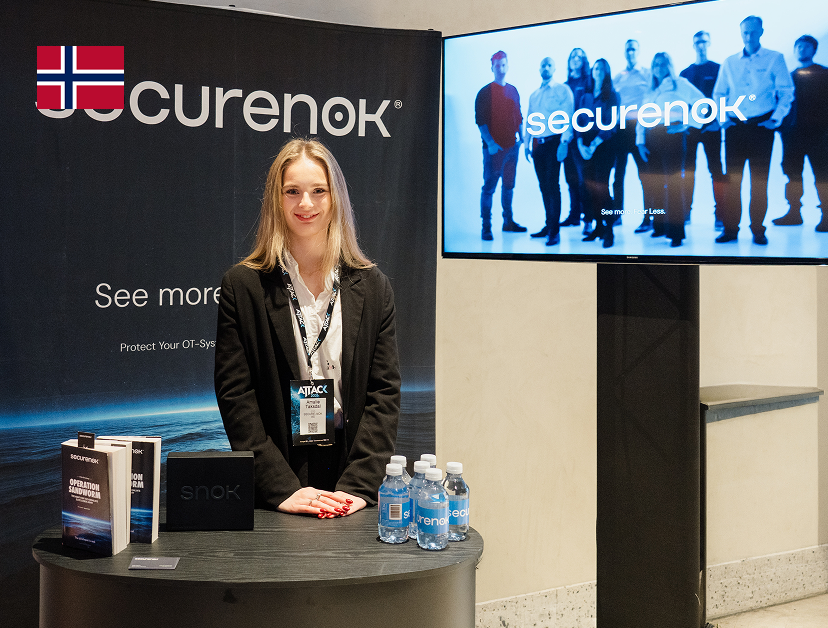
My first Attack conference: Golf, good conversations and a more serious backdrop
How do you present a cybersecurity company to potential customers while you are still learning about it yourself? I got to practise that when I attended my very first conference, the Attack conference, with SecureNOK on 13 October.

SNOK Health Check picks up speed – we are delivering OT overview after OT overview
What equipment is connected to the OT network, and who is communicating with whom? After several projects with the SNOK Health Check, I see how useful it is to get answers to these questions before deciding on the next security measure.
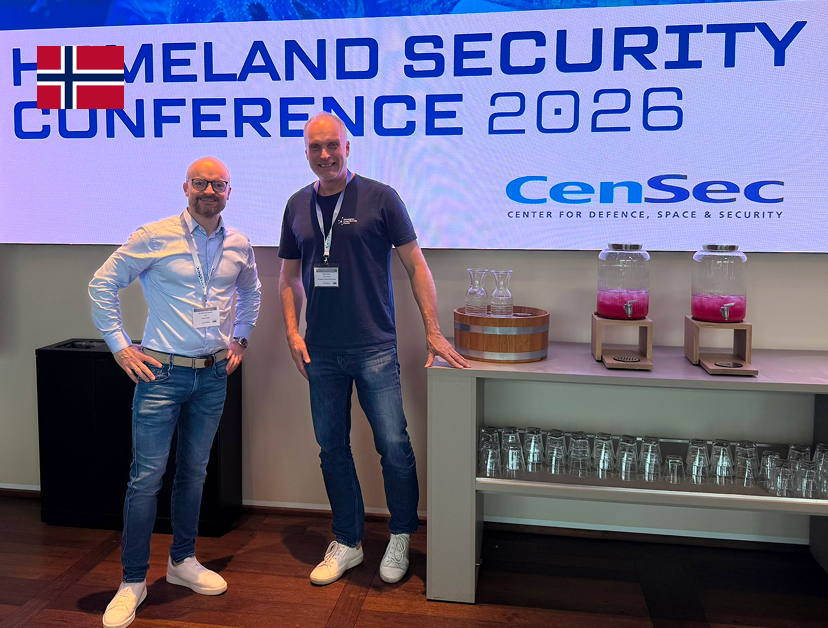
Water supply and critical infrastructure in focus at the Homeland Security Conference in Denmark
What does it take to keep society running when critical infrastructure is exposed to attacks and disruptions? This question was central when I attended the Homeland Security Conference in Copenhagen on 7 October with the Norwegian Cybersecurity Cluster.

Halfway through the OT Roadshow – time for the conversations that often have to wait
Trondheim, Bergen and Stavanger are done, and we are halfway through the OT Roadshow. For me, this is a valuable opportunity to look up from technology development and discuss security with those who know the everyday reality of industry.




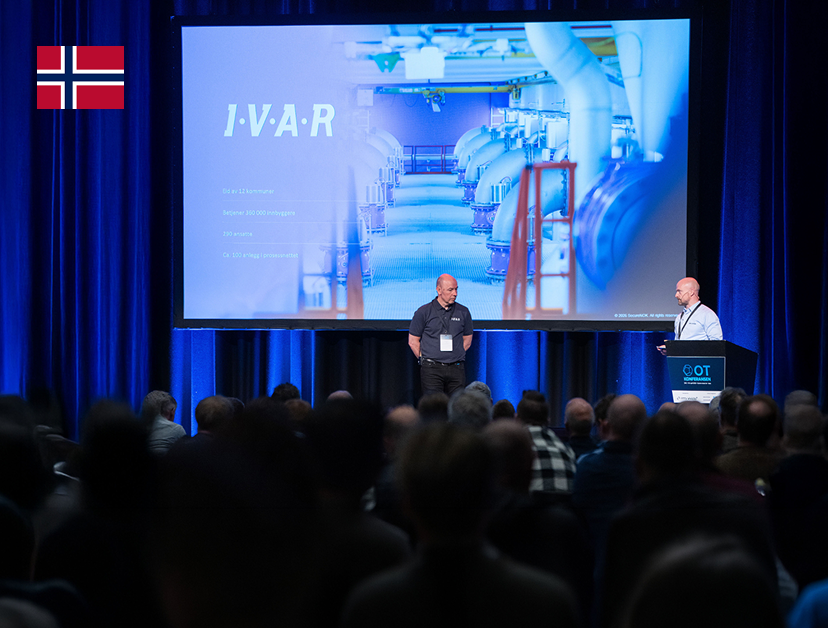
Full house as IVAR IKS shared its experiences with OT security
Interest in the webinar with IVAR IKS was greater than we had dared to hope. Through our October campaign on health checks for water and wastewater facilities, we are now making it easier for more organizations to take the same first step towards better overview and control of their OT environments.







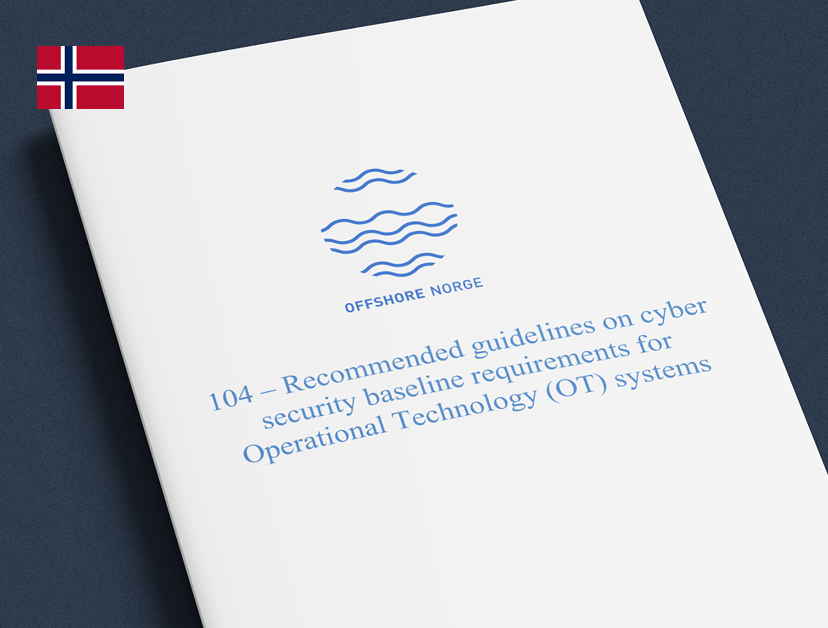
ON 104 has been updated: New requirements for safer and more robust operations on the Norwegian continental shelf
From 1 June 2026, the updated version of Offshore Norge Guideline 104 (ON 104 Rev. 7) applies – one of the most important frameworks for cybersecurity in operational technology (OT) in the petroleum industry.


The Norwegian Food Safety Authority's new guide makes one thing clear: Waterworks must now take OT security seriously
The Norwegian Food Safety Authority (Mattilsynet) has now published the first official guide to the Digital Security Regulations for drinking water. It is an important milestone for Norwegian water supply – and a clear signal that the authorities are now stepping up work on digital security in the sector.


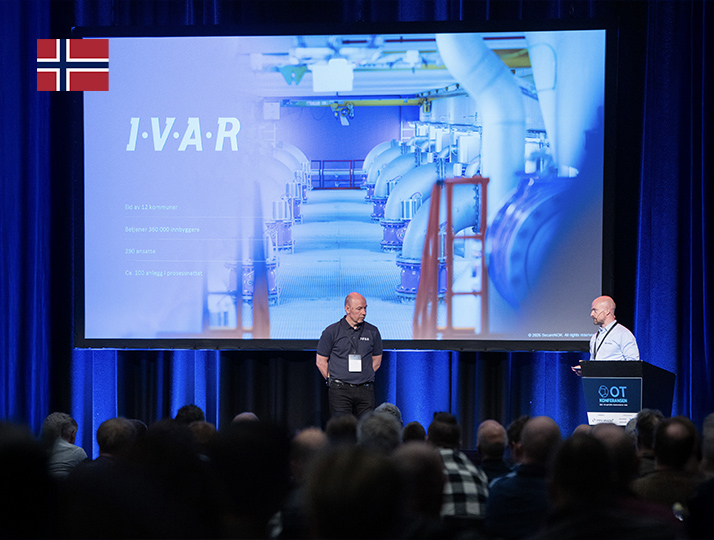
OT Konferansen shows the Nordics taking a leading role in OT security
Today, many industrial environments consist of industrial networks, virtual environments, Windows and Linux systems, remote access, patching and backup solutions, security tools, cloud services and integrations with IT.


OT security in the food industry starts with insight
As a project manager on OT security projects, I often encounter the same starting point at industrial companies: They know a great deal about production, processes and equipment – but far less about what the digital infrastructure actually looks like in practice.

Norwegian-developed OT security technology for industry and critical infrastructure
Norwegian industry is becoming increasingly digitalized. Production lines, process plants, energy systems and critical infrastructure are being connected more closely to modern IT systems, external suppliers and digital services. At the same time, there is a growing need for cybersecurity solutions actually developed for industrial environments.

Strong support for OT Konferansen 2026 – bringing together leading experts in Stavanger
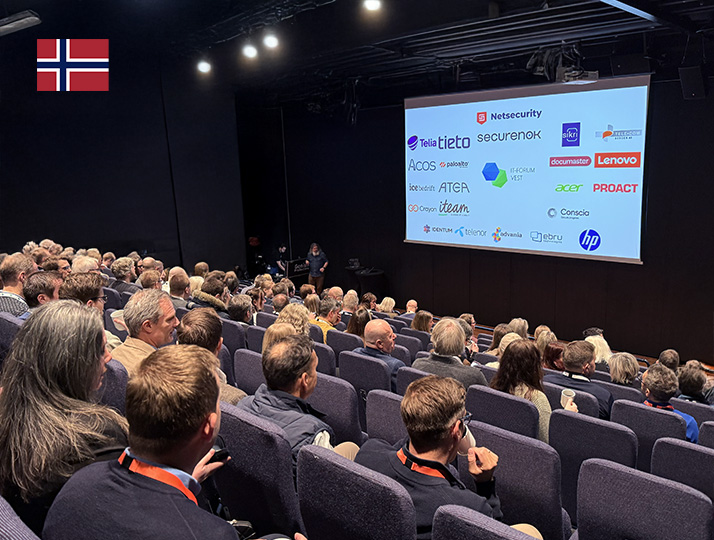
OT Konferansen 2026 takes place on 29 April in Stavanger, and this year's edition already stands out with a programme that brings together some of the most central players in OT security and industrial digitalization.
Growing need for control in complex automation environments in oil and gas
In recent years, the digitalization of the oil and gas industry has brought significant gains in efficiency, better data and greater flexibility. At the same time, this development has led to a significant increase in complexity – and therefore also in risk.

How to gain control of the OT environment in practice – experiences from IVAR
For IVAR IKS, stable operations are not just a goal – they are a prerequisite for society to function. As a provider of water and wastewater services to around 360,000 residents in Nord-Jæren, the organization manages critical infrastructure where the consequences of failure are immediate and extensive.

The Preparedness Year 2026: Are water and wastewater in Norwegian municipalities secure enough?
Municipal water supply is among the societal functions covered by the Digital Security Act. The Act entered into force on 1 October 2025 and sets basic requirements for digital security in organizations of particular importance to society. The regulations also place responsibility for digital security clearly with the organization's top management.



Stricter Security Requirements for Critical Services from 1 October 2025 under theDigital Security Act
O nFriday, 20 June, the Norwegian government decided in a Council of State meeting that the Digital Security Act will enter into force on 1 October 2025. At the same time, the Digital Security Regulation was adopted, entering into force concurrently with the Act.


Bremanger Breach: Lessons from a Norwegian Dam Hack
Earlier this year, unidentified hackers breached the control system of a Norwegian dam at Risevatnet, in Bremanger. The hackers discovered that the dam had a Human Machine Interface (HMI) exposed on the Internet and was able to gain access by exploiting a weak password.p
Digitalization: Opportunities and New Risks
Digitalization offers enormous opportunities for efficiency, but it also introduces new risks. When OT systems (Operational Technology) are connected to the internet, vulnerability to attacks increases—attacks that threaten not only data, but also lives, health, and critical societal functions.