

NEWS AND EVENTS
Digitalization: Opportunities and New Risks
Digitalization offers enormous opportunities for efficiency, but it also introduces new risks. When OT systems (Operational Technology) are connected to the internet, vulnerability to attacks increases—attacks that threaten not only data, but also lives, health, and critical societal functions.
As a member of the Confederation of Norwegian Enterprise’s Security Council (NSR), we hosted a webinar today focusing on the threat landscape for OT in Norway. Below are our key takeaways.
An Escalating Threat Landscape
The Norwegian Police Security Service’s (PST) annual threat assessment shows a clear shift: from a “low probability” of sabotage against Norwegian critical infrastructure in 2023, to “elevated” in 2024, and “likely” by 2025.
At the same time, cybercrime has become the world’s third-largest economy. A professional, commercial “Cybercrime-as-a-Service” industry has emerged, offering services such as extortion, data theft, and espionage.
Criminals follow the money, and willingness to pay is highest where the consequences of downtime are severe—such as in manufacturing and energy supply. Internationally, there is a clear trend toward an increasing number of attacks targeting OT systems. One example is the car manufacturer Jaguar, which was forced to halt production for over a month, resulting in the loss of 1,000 unproduced vehicles per day.
We also see a significant rise in hacktivism, often linked to geopolitical conflicts. Following the outbreak of war in the Middle East, several attempted attacks have been observed where hackers exploit internet-exposed equipment and simple system vulnerabilities.
When OT Becomes the Target
Traditionally, OT systems have been “air-gapped,” meaning physically isolated from the internet. This strategy is becoming increasingly difficult to maintain.Digitalization and remote access enable data to flow between IT and OT, suppliers connect remotely for maintenance, and system owners often have limited visibility into what is happening within their environments.
The incident at the Bremanger hydropower plant is one such example: hackers managed to open valves that remained open for several hours before the attack was detected and handled.
Legal Requirements and Increasing Expectations
Norway has now enacted the Digital Security Act, which came into force on October 1 this year. The legislation is based on the EU’s NIS Directive from 2016 and imposes requirements on organizations within sectors such as energy, transport, healthcare, water supply, and finance.
In addition, the NIS2 Directive expands the scope to include important private sectors such as food production and the chemical industry.
In short: societal expectations are tightening, and it is wise to begin the work early.
Typical Challenges in OT Environments
OT systems are often complex and outdated. They typically feature:
- High availability requirements – systems cannot be taken offline without serious consequences
- Long lifecycles – many systems are 10–20+ years old and were built before OT cybersecurity became a concern
- Dependence on vendors for operation, maintenance, and upgrades
- Limited visibility into internal processes, often perceived as “black boxes”
In addition, we see organizational challenges where IT and OT are managed by different teams with different routines and cultures. This creates grey areas where no one takes full responsibility for security.
Best Practice: Build Security on OT’s Terms
Many cybersecurity frameworks are designed for IT and must be adapted for OT environments. The international IEC 62443 standard is specifically tailored for OT and, when combined with the Norwegian National Security Authority’s (NSM) fundamental principles, provides a strong foundation.The four core principles from NSM are also relevant for OT:
- Identify and map – gain an overview of OT assets and communication patterns
- Protect and sustain – build a secure architecture that separates critical and non-critical systems and controls data flows between zones
- Detect – establish monitoring and alerting systems adapted to each facility
- Respond and recover – integrate operational and security functions for effective incident response
New Systems and Retrofitting Existing Facilities
New investments provide a prime opportunity to define clear security requirements. By applying principles from IEC 62443, systems can be structured using zone and conduit models, security levels can be defined, and requirements can be imposed on suppliers already during the tender process.For existing facilities, the work should begin with mapping:
- What equipment and communication exist?
- Which vulnerabilities are most critical?
- What can be attacked, and what are the consequences?
The outcome of this assessment should be documented in a security roadmap that includes both quick wins and measures aligned with long-term objectives.
Situational Awareness Is Key
No security measure is effective if you cannot see what is happening. Real-time monitoring of OT systems enables organizations to detect and respond to incidents before they lead to physical consequences.
OT security is no longer just about technical barriers—it is about understanding the interplay between operations, technology, and people. With increasing digitalization, stricter regulations, and a more complex threat landscape, Norwegian organizations must take OT security seriously.

Insights from Norway’s cybersecurity experts



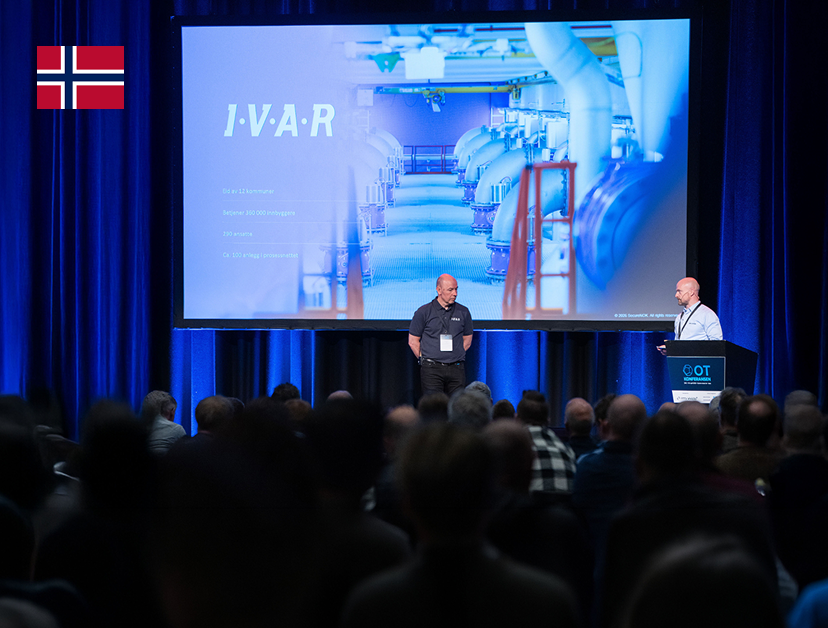
Fullt hus da IVAR IKS delte sine erfaringer med OT-sikkerhet
Interessen for webinaret med IVAR IKS ble større enn vi hadde våget å håpe på. Gjennom vår oktoberkampanje på helsesjekk i V/A-anlegg gjør vi det nå enklere for flere virksomheter å ta det samme første steget mot bedre oversikt og kontroll i egne OT-miljøer.









Mattilsynets nye veileder gjør én ting tydelig: Nå må vannverkene ta OT-sikkerhet på alvor
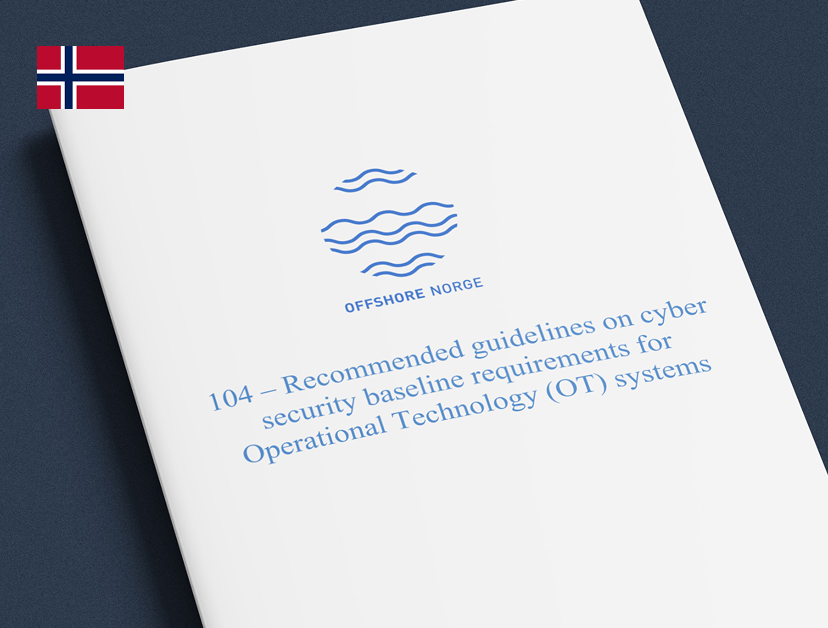
Mattilsynet har nå publisert den første offisielle veilederen til digitalsikkerhetsforskriften for drikkevann. Det er en viktig milepæl for norsk vannforsyning — og et tydelig signal om at myndighetene nå intensiverer arbeidet med digital sikkerhet i sektoren.






OT-sikkerhet i matindustrien starter med innsikt
Som prosjektleder i OT-sikkerhetsprosjekter møter jeg ofte det samme utgangspunktet hos industribedrifter: Man vet mye om produksjonen, prosessene og utstyret – men langt mindre om hvordan den digitale infrastrukturen faktisk ser ut i praksis.

Norskutviklet OT-sikkerhetsteknologi for industri og kritisk infrastruktur
Norsk industri blir stadig mer digitalisert. Produksjonslinjer, prosessanlegg, energisystemer og kritisk infrastruktur kobles tettere sammen med moderne IT-systemer, eksterne leverandører og digitale tjenester. Samtidig øker behovet for cybersikkerhetsløsninger som faktisk er utviklet for industrielle miljøer.

Sterk oppslutning rundt OT-konferansen 2026 – samler ledende fagmiljøer i Stavanger
OT-konferansen 2026 går av stabelen 29. april i Stavanger, og årets utgave peker seg allerede ut med et program som samler noen av de mest sentrale aktørene innen OT-sikkerhet og industriell digitalisering.

Økt behov for kontroll i komplekse automasjonsmiljøer i olje og gass
Digitaliseringen av olje- og gassindustrien har de siste årene gitt betydelige gevinster i form av effektivisering, bedre datagrunnlag og økt fleksibilitet. Samtidig har utviklingen ført til en betydelig økning i kompleksitet – og dermed også i risiko.

Hvordan få kontroll på OT-miljøet i praksis – erfaringer fra IVAR
For IVAR IKS er stabil drift ikke bare et mål – det er en forutsetning for at samfunnet skal fungere. Som leverandør av vann- og avløpstjenester til rundt 360 000 innbyggere på Nord-Jæren, forvalter virksomheten kritisk infrastruktur der konsekvensene av svikt er umiddelbare og omfattende.

Beredskapsåret 2026: Er vann og avløp i norske kommuner godt nok sikret?
Kommunal vannforsyning er blant samfunnsfunksjonene som omfattes av digitalsikkerhetsloven. Loven trådte i kraft 1. oktober 2025 og stiller grunnleggende krav til digital sikkerhet i virksomheter med særlig betydning for samfunnet. Regelverket innebærer også at ansvaret for digital sikkerhet er tydelig plassert hos virksomhetens øverste ledelse.




Stricter Security Requirements for Critical Services from 1 October 2025 under theDigital Security Act
O nFriday, 20 June, the Norwegian government decided in a Council of State meeting that the Digital Security Act will enter into force on 1 October 2025. At the same time, the Digital Security Regulation was adopted, entering into force concurrently with the Act.


Bremanger Breach: Lessons from a Norwegian Dam Hack
Earlier this year, unidentified hackers breached the control system of a Norwegian dam at Risevatnet, in Bremanger. The hackers discovered that the dam had a Human Machine Interface (HMI) exposed on the Internet and was able to gain access by exploiting a weak password.p